



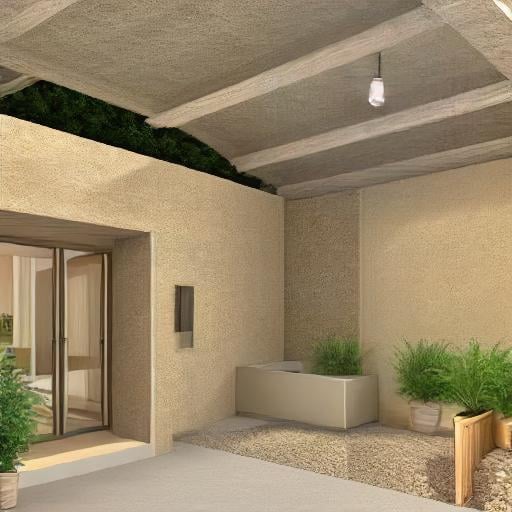
 As a component of an administration work to empower the utilization of all the more harmless to the ecosystem building materials, the U.S. Natural Insurance Organization (EPA) has granted an almost $6.2 million award to a charity that works with hempcrete, a concrete like material that is made with hemp.
The Nashville-based Hemp Building Organization, which works with substances that assembling and use development items, will get $6,186,200 to foster natural item statements (EPDs) and life cycle evaluations (LCAs) for biogenic materials, for example, those produced using hemp, soy and straw parcel, which EPA says “provide a unique opportunity to directly address climate change and reduce greenhouse gas emissions from the built environment.”
The thought is to make the subtleties of hempcrete and other structure materials made with farming items better known to producers and manufacturers to reduce reliance on concrete and different materials that cause more ozone harming substance outflows.
Coordinators “will develop an open-source database for biogenic materials and provide extensive education, training, and technical assistance,” says an EPA portrayal of the award grant. “The overall goal of the project is to assemble the assessments, protocols, tools and training in an ecosystem designed to increase adoption of biogenic building materials from agricultural crops.”
The honor is supposed to support action in Maryland, Tennessee, California and Alabama.
The Hemp Building Organization will collaborate with the Maryland-based business hatchery EntreVator to send off what’s being known as The Biogenic Structure Materials project, as indicated by a writeup of the honor by the Public Modern Hemp Chamber of America.
“This is a big victory for hemp and other natural building materials,” Jacob Waddell, leader of the Hemp Building Establishment, said in a video presented on Instagram.
A post shared by Hemp Building Organization (@hemp_building_institute)
 “The project will work with Alabama State University (ASU) and the California Straw Bale Association (CASBA) to develop an open-source database for biogenic materials,” the hemp council wrote, citing an email from Waddell. “Other partners will include the Parsons Healthy Materials Lab at The New School in New York City and the National Hemp Association.”
Todd Hughes, who established EntreVator told the hemp committee in an email that the organization is “deeply honored to receive this grant from the EPA, which marks the beginning of a pivotal journey towards the widespread adoption of biogenic building materials.”
Waddell let the gathering know that representing the ozone harming substance effects of biogenic materials is more complicated because of the sequestration of carbon during the growth of the plant material,” which diminishes the general impression of hempcrete and others contrasted with concrete. “Without efforts to properly account for the biogenic carbon of natural materials,” he said, “the impact of any stored carbon may be overlooked or disregarded.”
The hempcrete award is essential for a $160 million subsidizing round reported by EPA this month. The office said the honors will uphold 38 organizations, colleges and charities in each of the 50 U.S. states.
In 2022, a different government organization, the Branch of Energy (DOE), granted Texas A&M College $3.47 million to help an undertaking to 3D print hempcrete items, with an emphasis on making reasonable lodging.
“While production of conventional construction materials such as concrete requires large amounts of energy and releases large amounts of CO2 (carbon dioxide), hempcrete is a net carbon-negative material, which can provide major environmental benefits,” Petros Sideris, an associate teacher at the college and the task’s essential specialist, said at that point.
DOE likewise supported an undertaking in 2021 to foster hemp fiber protection intended to be better for the climate and general wellbeing than protection items. The organization granted the COO of Idaho-based Hempitecture a yearly allowance of $90,000 and as much as $200,000 to help investigation into the protection item.
DOE was intrigued explicitly in the organization’s HempWool item, which is depicted as “the most supportable, high performing protection material in the world.” Past being a non-poisonous option in contrast to customary protection, the hemp-based item likewise has areas of strength for an opposition and a low carbon impression.
