




Senate Democrats have, across recent Congresses, kept introducing bills that would take cannabis out of the Controlled Substances Act and stand up a federal tax and regulatory system in its place. Moving marijuana to Schedule III under the CSA as it stands is a different job. If you follow licenses, tax, banking, or a state’s own rules, that split is what you need to track. No headline about cannabis descheduling tells you which title would actually change, or when.
This piece explains the difference in general terms, so check the text of any bill, committee report, or agency rule before you rely on it. Cannabis law varies by state and changes frequently. Nothing here is legal, tax, or investment advice.
What descheduling means in these bills
Descheduling, here, means Congress would strike cannabis from the CSA entirely. The plant would no longer sit in Schedule I, II, III, or any other CSA schedule. Federal criminal prohibitions that flow from that listing would fall with it, and agencies that currently treat cannabis as a controlled substance under the CSA would lose that particular legal hook. Congress would rewrite the statute, which is something the Drug Enforcement Administration cannot do through ordinary scheduling rulemaking.

Public Democratic vehicles in this tradition include the Cannabis Administration and Opportunity Act (CAOA), long associated with Sens. Chuck Schumer, Cory Booker, and Ron Wyden, and House vehicles such as the Marijuana Opportunity Reinvestment and Expungement Act (the MORE Act). Those bills skipped the DEA reclassification path and instructed the code to stop treating cannabis as a controlled substance, then layered on tax, civil-rights, and market-structure titles. Confirm the current Congress, bill number, and enrolled text before you treat any description as operative law. Prior introductions do not stay pending just because the idea is familiar.
Rescheduling keeps cannabis inside the CSA. If a move from Schedule I to Schedule III is completed (the path the Department of Health and Human Services recommended in 2023, and that the DEA later took up through notice-and-comment rulemaking), some research barriers would ease, and Internal Revenue Code Section 280E could apply differently. Interstate shipments of recreational cannabis would still collide with federal controlled-substance law unless Congress changed that law. Descheduling bills try to solve that problem by leaving the CSA listing behind and writing a replacement statute.
Read any new text for three things: the exact definition of cannabis and hemp, the effective date, and what happens to existing federal criminal cases. Definitions matter because the Agriculture Improvement Act of 2018 already carved out hemp at not more than 0.3 percent delta-9 tetrahydrocannabinol on a dry-weight basis. A sloppy descheduling clause can collide with that line, or leave intoxicating hemp-derived products in a gray zone while flower from a licensed dispensary moves into a new federal system. The 0.3 percent figure is statutory hemp policy, not a market forecast, and Congress has debated whether that line still matches the products on shelves.
Pay attention to whether “cannabis” in a bill means the plant, the resin, extracts, synthetics, or all of the above. Pay attention to whether the bill preserves medical-research pathways that currently run through DEA registration, and whether it converts those into Food and Drug Administration (FDA) or National Institutes of Health processes. Silence on research can yank the old permission structure before a new one exists.
If you or someone you care about has a federal cannabis conviction, look for operative expungement or sealing language, not findings and sense-of-Congress paragraphs. Automatic relief, petition-based relief, and “study the issue” language produce three different outcomes. MORE Act-style vehicles have put restorative-justice provisions in the same package as descheduling. CAOA-style drafts have bundled civil-rights, small-business, and tax titles with the scheduling fix. The bundle is why these bills run long, and why a one-line “Democrats reintroduce cannabis bill” headline tells you almost nothing about what would happen to a real person.
How federal regulation would work after cannabis left the CSA
Once cannabis is off the CSA, someone still has to write the rules for manufacturing, labeling, taxes, and interstate commerce. Democratic regulation bills in this family have typically split that work in a way that resembles alcohol more than a DEA registrant regime. FDA-style authorities would cover product safety, manufacturing practices, and claims. Alcohol and Tobacco Tax and Trade Bureau-style authorities at Treasury would cover permits, formulation, and excise tax. Justice Department components would keep a narrower criminal and diversion role, closer to alcohol enforcement than to a closed CSA registration system.
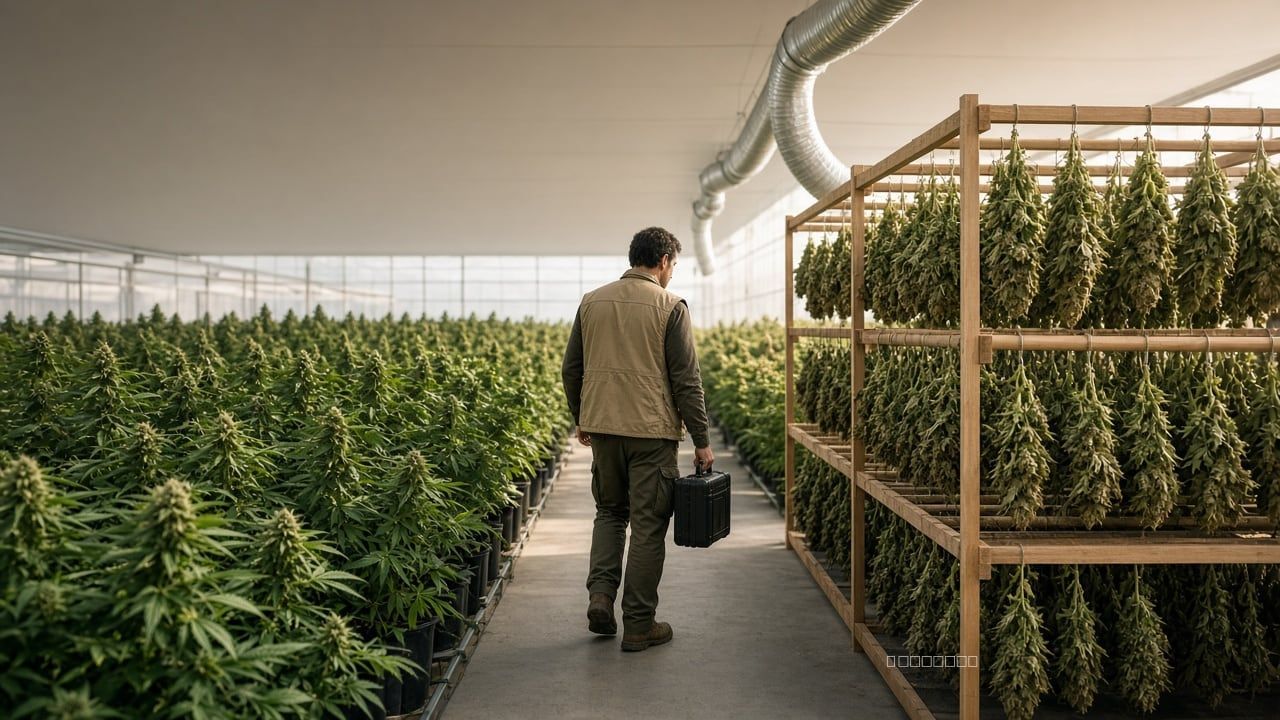
That architecture is why you get a descheduling-and-regulation bill instead of a descheduling-only bill. Removing a plant from the CSA without a replacement statute can create a vacuum. States already license cultivators, manufacturers, and retailers. Federal silence after descheduling would leave interstate cannabis, bankable operators, and a national brand strategy unresolved, and it would leave FDA food and drug authorities, Federal Trade Commission advertising rules, and Internal Revenue Service tax rules to fill gaps in ways nobody designed for this market.
Prior public drafts have generally set a federal minimum purchase and possession age of 21, consistent with federal alcohol policy, but that number stays a drafting choice until a bill is enacted. In any regulation title that is actually built out, look for limits on advertising that can reach minors, and on health claims that would turn a flower SKU into an unapproved drug. Look for testing, packaging, and contaminant standards that either sit on top of state rules or create a federal floor. Look for a permit or track-and-trace system so Treasury can collect tax and so FDA can recall a bad lot. None of those features is guaranteed until the enacted text says so.
If you run a licensed facility, the practical question is whether federal permits would piggyback on your state license or force a second application. Older public CAOA drafts contemplated federal permits for producers and importers, with states remaining the primary retail regulators. That sits closer to the beer and wine model than to a DEA registrant model. Read the permit section of whatever text is actually introduced before you assume your current license is enough. Recitals about “respecting state markets” do not substitute for a pre-emption or savings clause.
Interstate commerce is the piece consumers rarely see and operators feel immediately. A true federal market would let a tested, permitted product cross a state line. It would also force a fight over whose rules travel with the box: origin-state testing, destination-state packaging, federal labeling, or all three. If you already move hemp-derived products across state lines, you have seen how ugly that fight gets when the statute is vague. Ask whether the bill pre-empts conflicting state bans, whether it lets a state that prohibits adult-use cannabis keep the product out, and whether medical programs keep a separate lane. Adult-use and medical get mashed together in political speech. In a regulation title they can be different permits, different taxes, and different labeling rules.
Also read the enforcement clock. A bill can deschedule on enactment and give FDA and Treasury a period of months to write rules, or it can delay descheduling until those rules exist. Those two sequences produce different transition problems. In the first, CSA prohibitions can be gone while the new civil rules are not yet in force. In the second, state markets keep living under the old federal conflict until Washington finishes its homework. Map inventory, contracts, and insurance against the effective-date section, not against a press conference. Do not treat a round number of months mentioned in a draft as a promise. Implementing deadlines slip, and courts and agencies can still fill gaps in unexpected ways.
What would change for taxes, banking, and Section 280E
Section 280E of the Internal Revenue Code denies ordinary business deductions to a taxpayer who traffics in a controlled substance listed in Schedule I or II of the CSA. Licensed cannabis companies have lived with that rule for years. Tax practitioners and court cases have generally treated cost of goods sold as still available in many situations, while typical selling, general, and administrative expenses are not. The result is a higher effective federal tax burden than a comparable non-cannabis business would face. How 280E has operated is a separate question from any company’s future tax rate.

Descheduling would remove the CSA predicate that 280E uses, because the statute is tied to Schedule I and II trafficking. A completed move to Schedule III could also take cannabis outside 280E, because the statute names Schedules I and II rather than Schedule III. Either path can change the tax picture. Only descheduling plus a new statute designs the replacement: a federal excise tax, credits, and how those revenues get spent. Do not budget a new effective tax rate off a press release. There is no single industry-wide percentage that is safe to plug into a model.
Democratic bills have repeatedly tied new cannabis tax revenue to opportunity, reinvestment, and expungement programs. MORE Act vehicles have centered a trust fund and restorative-justice provisions alongside descheduling. CAOA-style drafts have included tax, civil-rights, and small-business provisions in the same package. Those pieces are why the bills draw support and resistance independent of the scheduling question. A member who will vote to take cannabis off Schedule I may still fight the tax rate, the trust fund, or small-business set-asides.
Read the excise tax base (weight, THC content, or price), the deduction rules, and the effective date. State cannabis taxes would remain. Federal tax would stack unless the bill says otherwise. If you are a retailer, ask whether the federal tax hits you, the distributor, or the cultivator. If you are a manufacturer of vapes or edibles, ask whether concentrates are taxed as the plant or as a processed good. Alcohol and tobacco law is full of those forks, and they decide who can price a product. Until Congress enacts a base and a rate, any dollar figure you hear in advocacy is a proposal.
Banking sits next to this problem without being the same statute. Descheduling would reduce the tension between the Bank Secrecy Act, CSA prohibitions, and state-legal operators that has kept many institutions on the sidelines. It would not, by itself, rewrite FinCEN guidance or create a cannabis-specific safe harbor of the kind the SAFE Banking Act and later SAFER Banking drafts have tried to write. If you are an operator or an investor, treat descheduling, 280E, and banking as three linked problems with three different statutory fixes. A regulation bill may attempt all three, while an administrative rescheduling rule will leave banking law untouched.
Insurance, merchant processing, and commercial leases often track the banking problem more than they track the CSA schedule on paper. A bill that deschedules but leaves vague anti-money-laundering expectations will not magically produce a credit-card terminal. Read any findings about “legitimate business” against the actual amendments to banking and tax titles. Findings leave money where it is. Operative language is what moves it.
How this differs from what the DEA can do on its own
The DEA cannot deschedule cannabis the way Congress can, and it cannot build an adult-use commercial code. Under the CSA, scheduling actions follow a medical and scientific file, treaty considerations, and formal rulemaking. HHS transmitted a Schedule III recommendation in 2023. That administrative process, if completed, would change research conditions, some criminal-penalty exposure tied to schedule, and potentially the 280E analysis. It would leave the old conflict in place for adult-use stores: state-legal sales of a substance that remains federally controlled.

Congress can do what the DEA cannot: strike the listing, accommodate state markets, set interstate rules, and assign FDA and Treasury. That is why Democratic leadership has returned to a descheduling-and-regulation bill even while an administrative rescheduling file has moved. The two tracks can run at once, and they can collide. A completed Schedule III rule would still be superseded if Congress later removed cannabis from the CSA. Until one path is finished, do not treat either track as already having changed your daily compliance file.
Treaties are a quieter constraint. The United States is a party to the Single Convention on Narcotic Drugs. Descheduling bills often include findings or foreign-policy language meant to manage that tension, sometimes by keeping certain control measures even after CSA removal. If you care about import, export, or isolate that crosses borders, read that section. Domestic adult-use policy is not the only thing in the bill, and treaty language can limit how far a “deschedule” section actually goes.
Committee jurisdiction is the other constraint, and it is more immediate than Vienna. In the Senate, finance (tax), health (FDA), and judiciary (CSA, expungement) all have a claim. A bill that has to pass all three is a different political object than a simple scheduling amendment. House energy and commerce, ways and means, and judiciary split the same way. When you hear that Democrats “reintroduced” a cannabis bill, ask which committees received it and what the current bill number is. A judiciary-only descheduling vehicle and a multi-title regulation vehicle live different lives, even if both say “deschedule” in the first section.
What you should actually do if you follow the market
Read the bill text, not the one-line headline. Confirm whether the vehicle deschedules, reschedules, or only studies the question. Confirm how it treats hemp and synthetic cannabinoids. Confirm whether your state’s medical or adult-use program would be recognized, limited, or forced to conform to a federal floor. If no current text is posted, treat commentary about “the Democratic bill” as a description of a family of proposals, not as enacted policy.

If you hold a state license, map your current compliance file against a future federal permit: ownership disclosures, pesticide and contaminant testing, packaging, and advertising. If your state already requires seed-to-sale tracking, ask whether a federal system would duplicate it or accept it. Duplication is a cost, and acceptance is a negotiation that will show up in implementing regulations, not in a bill’s recitals.
If you are a consumer, your state’s possession limits, public-use rules, and employment policies would still govern you until federal law and your legislature say otherwise. Federal descheduling would not legalize home grow in a state that bans it, and it would not let you carry cannabis through Transportation Security Administration screening. Airport security and federal property run on their own statutes, and a CSA change does not rewrite them by implication. Do not assume that “federal legalization” in political speech means you can fly with flower, use on federal land, or ignore a workplace policy.
Track what is not in the bill. Employer drug testing, firearm possession under 18 U.S.C. 922, immigration consequences, and use on federal land often survive even ambitious reform vehicles. If those issues affect you, assume they remain until you see operative language that changes them. The same caution applies to veterans’ medical programs, federal housing, and commercial drivers. “Deschedule” in a speech is easy to hear as a clean sweep. Statute by statute, the rest of the code usually stays put.
Use a reintroduction as a reading list, not as a business plan. Compare any new text with the last CAOA or MORE Act draft you already know. Mark what moved: the hemp definition, the tax base, pre-emption, expungement mechanics, and the effective date. Those five marks will tell you more than any floor speech. Then check your own state house. Federal reform, if it comes, will still land on top of the license you already hold, the local zoning you already fight, and the possession rules you already live with. State medical programs, local moratoria, and employment law will not vanish because Washington changed a schedule.
None of this is a promise that any particular bill will pass, that any agency will finish a rule, or that any operator will see a given tax or banking outcome. Congress has introduced ambitious cannabis vehicles before without enacting them. Administrative rescheduling can stall, be rewritten, or be overtaken by legislation. The only numbers that belong in a compliance file are the ones in statutes, regulations, licenses, and filed tax positions, not the ones in advocacy.
The legal landscape for cannabis is always changing. Confirm your own local, state, and federal rules before you act on anything in this piece.
Frequently asked questions
Would a Democratic descheduling bill make cannabis legal in every state?
No. It would remove cannabis from the Controlled Substances Act and set federal civil rules, but states could still ban, limit, or tax it. Your possession, grow, and storefront rules would still start with state and local law unless the bill clearly pre-empts them.
Is descheduling the same as DEA rescheduling to Schedule III?
No. Rescheduling keeps cannabis inside the CSA. Descheduling takes it out and, in these bills, replaces the listing with FDA- and tax-style regulation. Schedule III could affect research and 280E. It would not build a legal interstate adult-use market.
Would this end IRS Section 280E for licensed operators?
Descheduling would remove the Schedule I and II predicate that 280E uses, so the old disallowance should not apply once the listing is gone. A new federal excise tax could still arrive in the same bill. Read the tax title and the effective date rather than assuming your rate simply falls.
Could I fly with cannabis if Congress descheduled it?
Not based on descheduling alone. TSA screening, aircraft rules, and federal property statutes are separate from the CSA schedule. State possession law would still apply when you land. Do not treat a reform bill as permission to carry cannabis through an airport.
What happens to hemp and intoxicating hemp products under these bills?
That depends on the definition section. The 2018 Farm Bill already separates hemp at 0.3 percent delta-9 THC. A descheduling bill can leave hemp where it is, fold some products into the new cannabis system, or create a gap. Read that definition before you assume a SKU is in or out.
Sources
- Federal tax treatment of cannabis businesses, including Internal Revenue Code Section 280E and cost of goods sold (Internal Revenue Service)
- FDA authority and rules for cannabis, cannabis-derived products, and CBD (including approved drugs vs. unapproved foods/supplements) (U.S. Food and Drug Administration)
- Federal proposed transfer of marijuana from Schedule I to Schedule III under the Controlled Substances Act (Federal Register)
- 26 U.S. Code § 280E – Expenditures in connection with the illegal sale of drugs
- 21 U.S. Code § 812 – Schedules of controlled substances
