



FOR IMMEDIATE RELEASE
Thursday, May 29, 2025
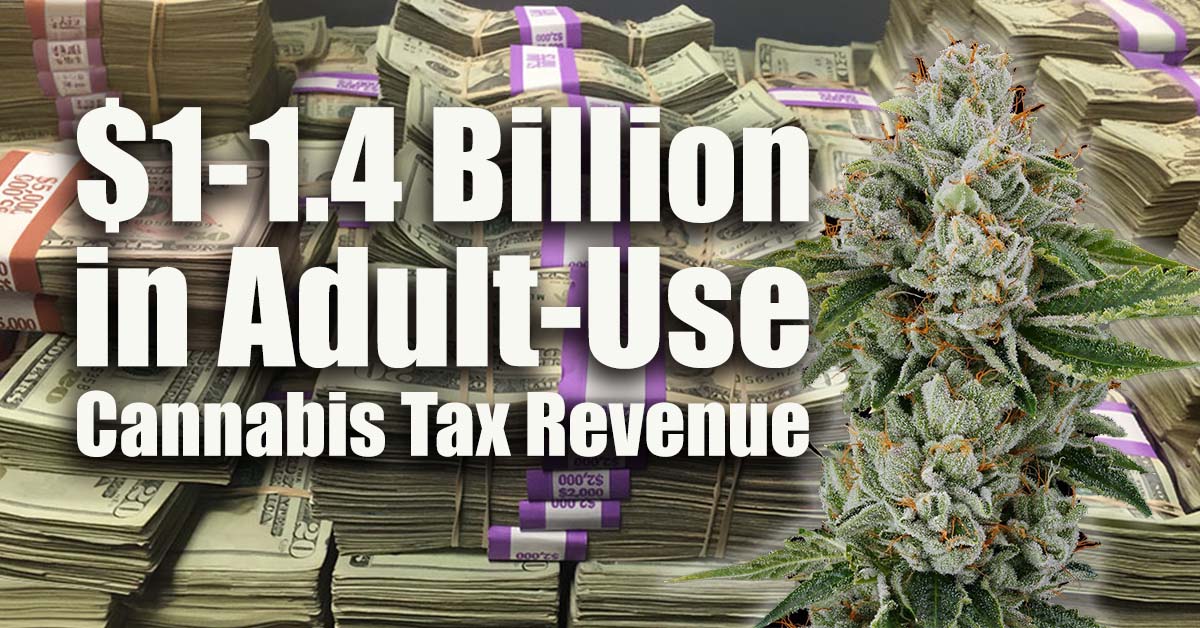
A newly released report by the Marijuana Policy Project (MPP) provides a comprehensive forecast of the potential tax revenue generation in Pennsylvania following the legalization of adult-use cannabis. The analysis projects that within the first four years of legal sales, the Commonwealth could realize an estimated $1 to $1.4 billion in tax revenue.
Year-by-Year Revenue Projections
Drawing upon the experiences and revenue figures from established adult-use cannabis markets in Arizona, Maryland, and Michigan, the MPP report offers a detailed breakdown of anticipated tax revenue on an annual basis. Assuming a total tax rate of 16% at the retail level, the projections indicate that Pennsylvania could expect to generate between $105 million and $236 million in tax revenue during the initial year of legal sales. This figure is then projected to grow significantly, reaching an estimated range of $320 million to $610 million by the fourth year of implementation.
Expert Commentary on Fiscal Opportunities
Karen O’Keefe, Director of State Policies at the Marijuana Policy Project, emphasized the critical juncture at which Pennsylvania finds itself. She noted that the state’s current period of fiscal uncertainty underscores the lost economic opportunity as neighboring states benefit from cannabis tax revenue that could otherwise be directed within the Commonwealth. O’Keefe urged Pennsylvania lawmakers to capitalize on the potential to not only strengthen the state budget and stimulate economic growth but also to advance individual freedoms and establish crucial public health regulations within a legal cannabis framework.
Legislative Developments and Debates
The issue of cannabis legalization has seen recent legislative activity in Pennsylvania. On May 7, 2025, the Pennsylvania House of Representatives passed House Bill 1200 (HB 1200). This bill proposed a model for legal adult-use cannabis sales through state-operated stores, extending to individuals aged 21 and older. However, this legislative effort encountered a setback on May 13 when the Senate Law and Justice Committee voted down HB 1200. Senator Dan Laughlin (R), the committee chairman, voiced his opposition to the state-run retail model as the primary point of contention.
In a contrasting development, Senators Laughlin and Sharif Street have jointly circulated a cosponsorship memorandum outlining a bipartisan legislative proposal. This alternative bill advocates for a system of privately operated cannabis stores. Proponents of this model argue that it would circumvent the potential uncertainties, considerable expenses, and inherent delays often associated with establishing and managing a state-run retail infrastructure.
National Landscape of Cannabis Tax Revenue
The experience of states that have already legalized adult-use cannabis provides a compelling context for Pennsylvania’s potential. Since the pioneering adult-use markets launched in Colorado and Washington in 2014, states across the nation have collectively generated an impressive total of over $24.7 billion in tax revenue from legal cannabis sales. Notably, the year 2024 witnessed the highest annual revenue generation to date, with over $4.4 billion in cannabis tax receipts reported across legal markets.
Evolution of Cannabis Legalization Across the United States
As of the current date, twenty-four states, along with the District of Columbia, have enacted legislation legalizing the possession of cannabis for adult individuals aged 21 and older. Within this group, all jurisdictions with the exception of Virginia and the District of Columbia have further established regulated and taxed systems for cannabis sales. Additionally, two states that have legalized cannabis – Delaware and Minnesota – are currently in the process of setting up their retail frameworks, with sales yet to commence.
Diverse Allocation of Cannabis Tax Revenue
A significant aspect of cannabis legalization is the diverse range of public programs and services that have benefited from the generated tax revenues in various states. These funds have been strategically allocated to address critical needs and invest in essential areas, including:
- Healthcare: Funding for Medicaid programs.
- Education: Support for public education initiatives and school infrastructure projects.
- Infrastructure: Investment in road maintenance and construction.
- Social Services: Resources for early literacy programs, bullying prevention initiatives, behavioral health services, and alcohol and drug treatment programs.
- Veterans Affairs: Funding for services and support for military veterans.
- Environmental Conservation: Resources dedicated to conservation efforts.
- Workforce Development: Support for job training programs.
- Criminal Justice Reform: Covering expenses related to conviction expungement processes and reinvesting in communities disproportionately impacted by historical cannabis prohibition policies.
The potential for such diverse and impactful applications of cannabis tax revenue underscores the significant opportunities that legalization presents for Pennsylvania.
###
Founded in 1995, the Marijuana Policy Project (MPP) is the nation’s leading cannabis policy reform organization. MPP has played a central role in passing dozens of cannabis policy reforms in states across the country, including 14 successful cannabis legalization campaigns, and also works to advance federal reforms. Visit www.mpp.org for more information.
Contact: Violet Cavendish
vcavendish@mpp.org
